EST. 1817
Two Centuries of Story
From a thousand-acre property on the Kentucky frontier to one of America’s finest Federal estates, Ridgeway has witnessed over two hundred years of history, hospitality, and celebration. Listed on the National Register of Historic Places and documented by the Library of Congress.
Colonel Henry Massie & Helen Scott Bullitt
The Founders
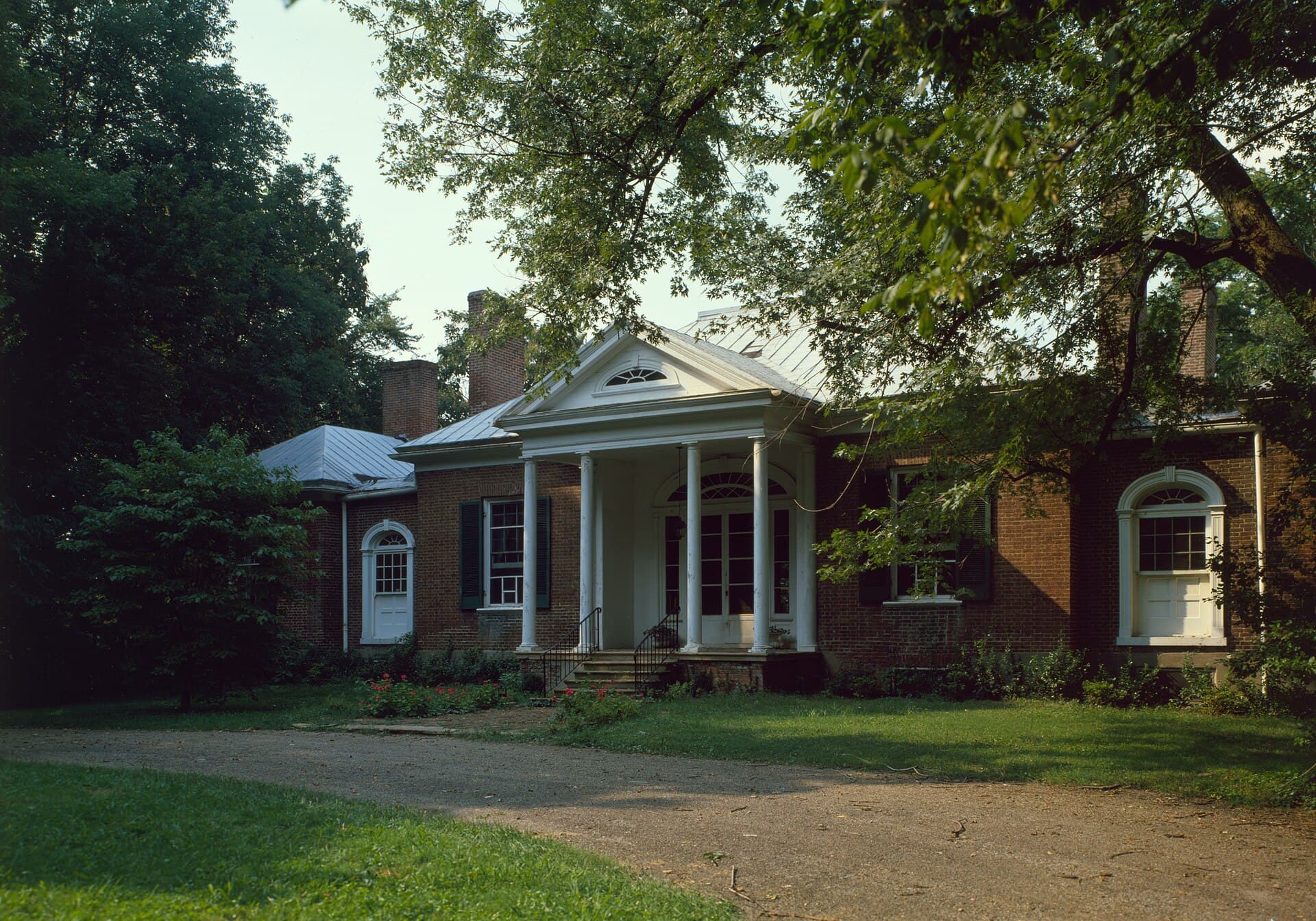
Built circa 1817–1819 on a thousand acres of Kentucky bluegrass, Ridgeway was commissioned by Colonel Henry Massie for his wife Helen Scott Bullitt—daughter of Kentucky’s first lieutenant governor and great-niece of Patrick Henry.
The five-part Federal composition, with its tetrastyle Doric portico and Flemish bond brickwork, was recognized even then as extraordinary. The house featured the largest windowpanes of their age in Kentucky—13 × 20 inches each—most of which survive today, identifiable by color and imperfections in the glass.
Helen was a formidable figure who protected her property through three marriages via prenuptial agreements. Her second husband, John Lewis Martin, was a wealthy merchant. Her third, Marshall Key, was connected to the Francis Scott Key family. After Henry’s death in 1830, Helen maintained the estate until her own passing in 1872 at age 80.
- Five-part Federal composition—one of only two in Kentucky
- Largest windowpanes of their age in the state
- Connections to Patrick Henry and Francis Scott Key families

The Bullitt Family Inheritance
Stewards of Heritage
Following Helen’s death, the estate was partitioned among the Bullitt family nieces and nephews. William C. Bullitt inherited the property, passing it later to Joshua F. Bullitt.
Through these decades, Ridgeway remained in the extended family that had built it, preserving its character and ensuring continuity with its founding vision.
The Kaelin Family
A Living Home
The Kaelin family brought new life to Ridgeway, raising their children within its walls. One child was even born in the dining room. Years later, the Kaelins provided invaluable oral histories about early 20th-century life at the estate.

Maud & Aubrey Cossar
The First Restoration
The Cossars undertook the first significant restoration, adding electricity and modern plumbing while preserving the Federal-era character. They engaged landscape architect A.W. Cowell and architect Frederic L. Morgan to enhance both the grounds and structure.
Their work established the gardens and landscape features that remain central to Ridgeway’s beauty today.
Judge Churchill & Martha Humphrey
A Colorful Chapter
Judge Churchill Humphrey—a Naval Academy graduate and known curmudgeon—purchased 31.97 acres and continued enhancing the property. His wife Martha hosted legendary tea parties, though Churchill once famously escaped through a trap door to Florida to avoid attending one.
Four Italian paintings the Humphreys brought to Ridgeway still hang in the hallways today.
The Birkhead Family
Restoration & Legacy
“Ben said, ‘I love everything about this house.’ I knew then the deal was done.” When Ben and Carole Birkhead purchased Ridgeway on July 1, 1977, for $202,000, they began what would become a thirty-year labor of love.
Carole meticulously restored every detail—stripping paint to find original colors, replacing plaster, refinishing all eight carved cherry mantels. She studied Federal architecture deeply and wrote the definitive book on the house’s two-hundred-year story: Ridgeway: The House and the Home.
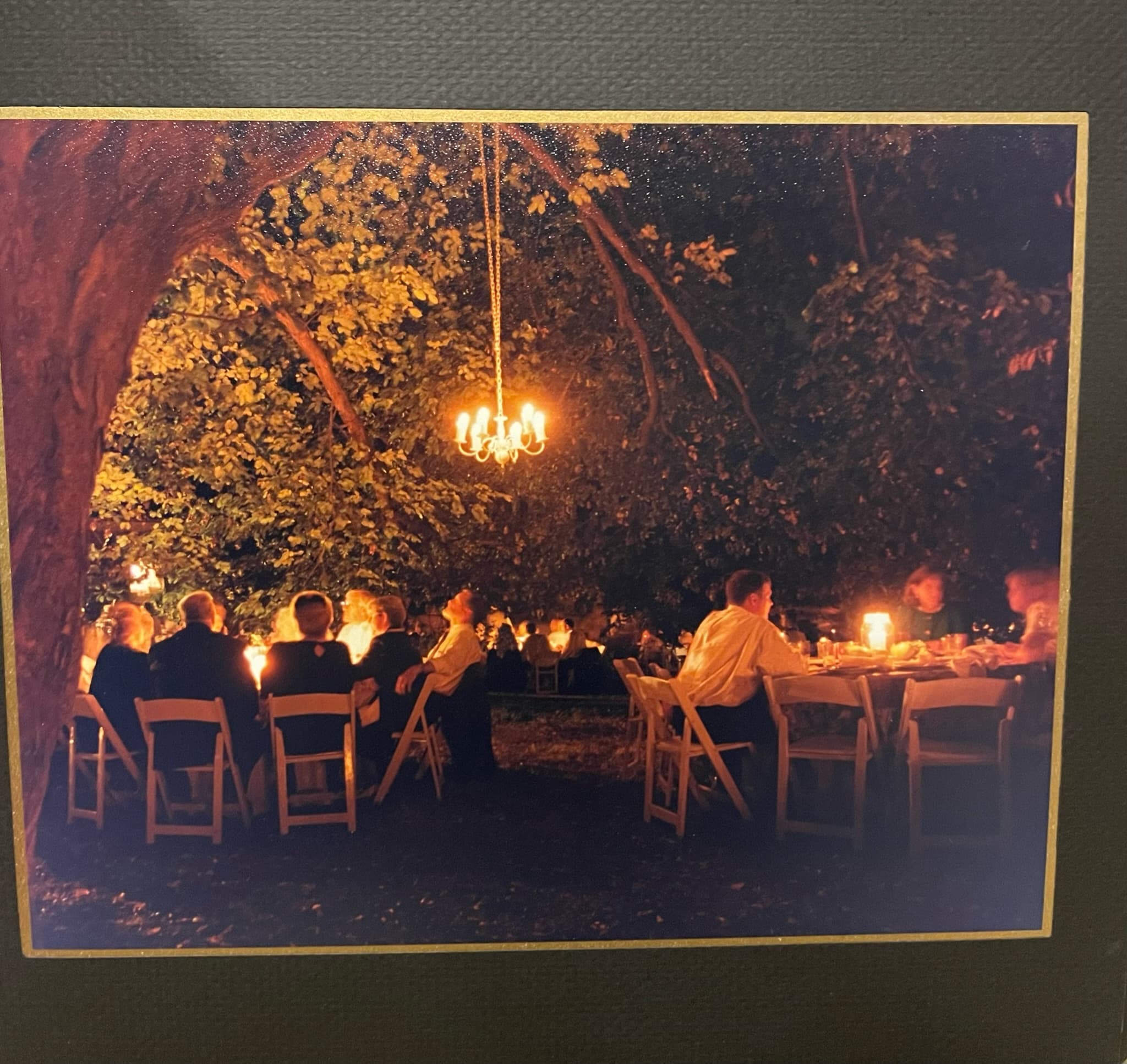
Carole’s thirty years of meticulous work—stripping paint, replacing plaster, refinishing mantels, and preserving every original detail—are the reason Ridgeway stands as it does today. That legacy lives on in her children: Hays, Carrie, Ginny, and Linda, who now open Ridgeway’s doors to a new generation of celebrations.
- 30+ years of meticulous restoration
- All eight cherry mantels refinished by hand
- Author of Ridgeway: The House and the Home
- Vision: Celebrated as guests, honored as ours, welcomed as family
The layout of Ridgeway was derived by a methodical and thorough mind.
— Clay Lancaster
Five-Part Federal Composition
A central block flanked by hyphens and end pavilions under low hipped roofs. Only the Morton House in Lexington shares this form in Kentucky.
The Portico
Tetrastyle Doric columns with limestone steps from the Kentucky River Valley, featuring a decorative swirl at the base.
Original Windows
Twelve-over-twelve double-hung windows with the largest panes of their age in Kentucky—13 × 20 inches each. Most are original, identifiable by color and imperfections.
Cherry Mantels
All eight mantels are cherry, carved in a restrained but elegant manner. Much of the carving is identical to Farmington (begun 1816), suggesting the same craftsmen.
Elliptical Fanlights
Five interior elliptical fanlights grace the doorways, with the front entrance surrounded by sidelights and a large elliptical fanlight decorated with alternating metal flowers and stars.
Original Floors & Locks
White ash floorboards, some 14+ feet long, remain unfinished as originally laid. Handmade black box locks—each a slightly different size—secure every door.
Library of Congress · 1940–1974
25 photographs, 10 measured drawings, and 11 data pages documenting the architecture and construction of Ridgeway.
Architecture In Old Kentucky
Rexford Newcomb · 1953
Newcomb declares Ridgeway "Kentucky's finest surviving example of Federal domestic design" and details the portico's "lightest and most delicate membering."
Greek Revival Architecture in America
Talbot Hamlin · 1944
Hamlin calls Ridgeway "the best of the several five-part composition, single story country houses in Kentucky."
Antebellum Architecture of Kentucky
Clay Lancaster · 1991
Lancaster's comprehensive survey features Ridgeway, noting its layout was "derived by a methodical and thorough mind."
Architecture of the Old South: Kentucky and Tennessee
Mills Lane · 1993
Ridgeway is featured in Lane's monumental ten-volume series on the architecture of the American South.
Society of Architectural Historians · Ongoing
The authoritative digital encyclopedia of American architecture includes a scholarly entry on Ridgeway by Patrick Snadon.
National Register of Historic Places
U.S. Department of the Interior · 1973
Listed April 11, 1973 under Criterion C for architectural significance. Nomination prepared by the Kentucky Heritage Commission.
Ridgeway: The House and the Home
Carole C. Birkhead · 2010
The definitive 47-chapter history of the property, drawing on the Bullitt Family Papers, oral histories, and thirty years of restoration experience.
I don’t think it happens often, that a house changes the lives of its occupants. Ridgeway has certainly done that for me.
— Carole Birkhead